
How Liventus Built an Agentic Layer on Dynamics 365
How one request in May evolved into an intelligence layer on top of Dynamics 365.
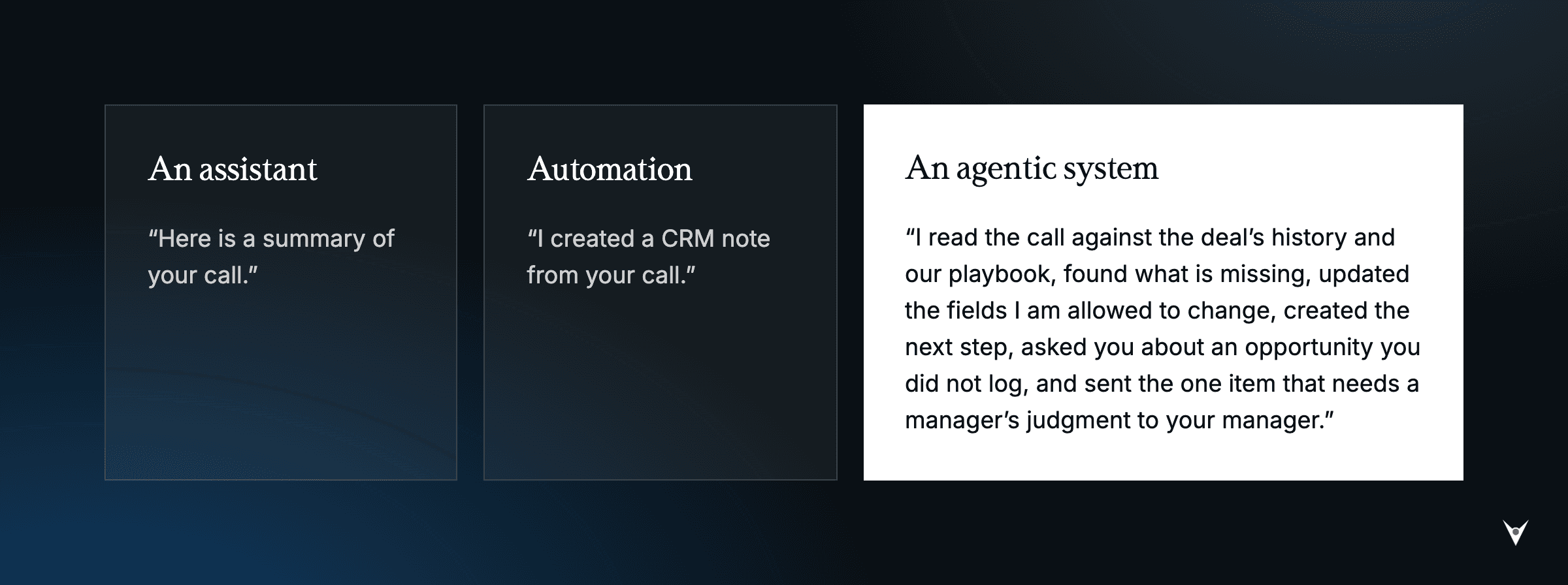
In May, Dan Levin wanted his sales reps to get useful feedback on their recorded calls. Four months later, that one request had grown into a full intelligence and action layer sitting on top of Microsoft Dynamics 365.
The system can read calls and emails, holds every deal to the company's sales playbook, writes its own CRM notes and next steps, asks a person when it's unsure, drafts manager check-ins, and hands closed deals off to delivery and legal. Dynamics stayed the system of record; we did not need to replace anything or start from scratch.
The tangible utility here isn't that it's "AI". The hard part, and the actual subject here, was translating the way Liventus actually sells into rules, permissions, and thresholds a system could act on safely. That required someone who understood both the sales process and the solution architecture.
Below you'll find a high-level overview of the solution. Fill out the form below or email marketing@liventus.com to get the full architecture and white paper.
The Challenge
Useful information was evaporating after every call. Reps recorded their sales calls, but the AI-generated summaries were flat and context-blind — no knowledge of the account's history, the playbook, or what "qualified" even meant at Liventus. The good stuff (a client's real need, an unanswered objection, the actual next step) stayed in the recording and never made it into the CRM.
Manual entry didn't happen. Even when reps got useful feedback, someone still had to type the notes, tasks, and next steps into Dynamics by hand — and mostly, they didn't. Data stayed thin, which made reporting hollow.
The business rules, not the AI, were the real problem. What counts as a qualified deal? Which fields can a system change on its own, and which need a human to click "Apply"? Who decides when a call, the CRM, and a signed contract disagree with each other? None of these are AI questions — they're operating-model questions, and none of them had been written down anywhere a machine could use them.
Solving problems just exposed the next problem. Once call grading worked, reps wanted the note written for them. Once notes were automatic, they wanted the deal graded. Once deals were graded, delivery, legal, and finance all wanted in — because the same conversations carrying sales signal also carried delivery and contract signal nobody was capturing.
The Solution
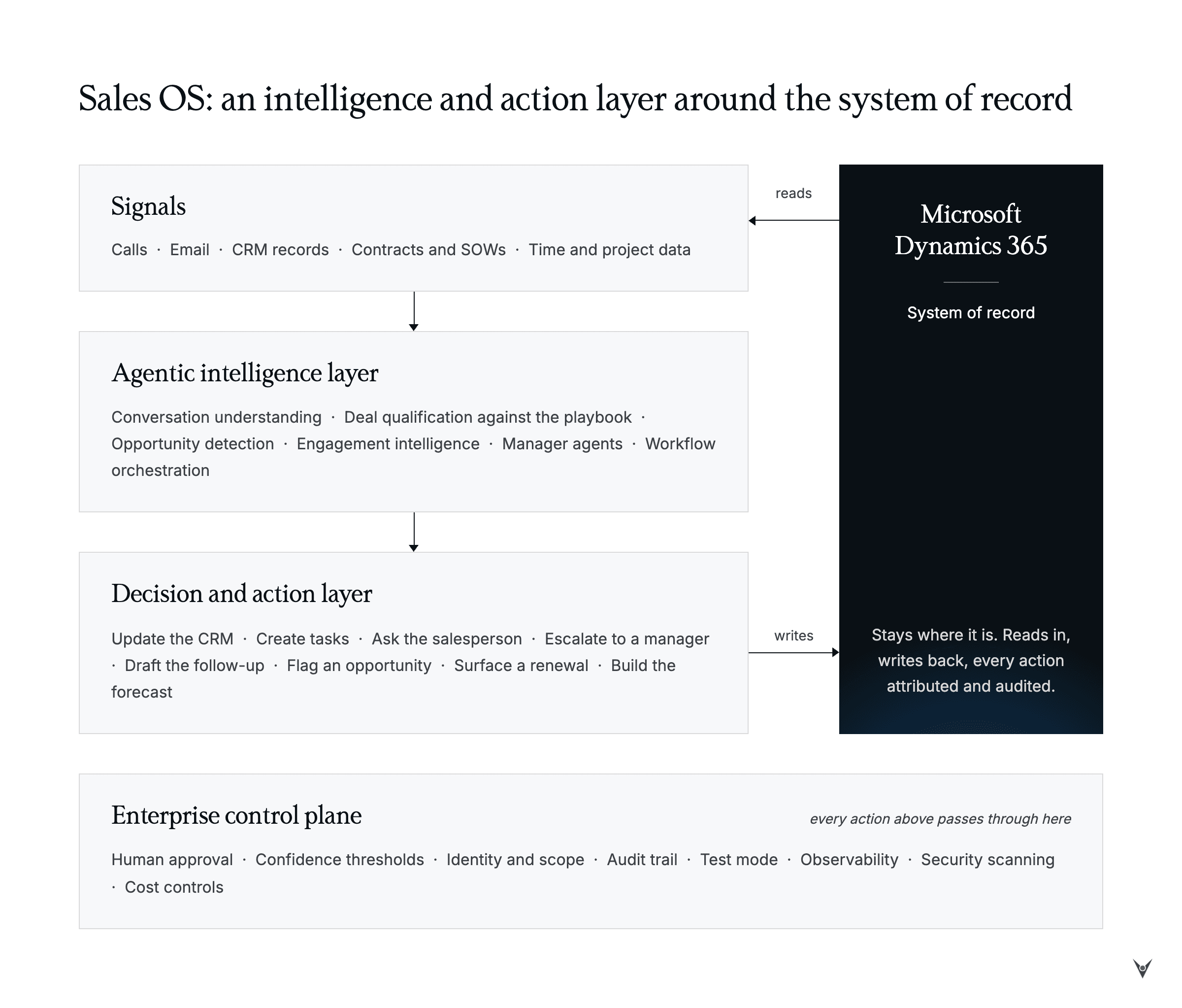
Built intelligence around Dynamics, not a replacement for it. Rebuilding a CRM from scratch would have meant months recreating infrastructure Liventus already had (accounts, permissions, integrations, years of data) to solve the wrong problem. Instead, the system reads from and writes back to Dynamics, making the existing CRM smarter rather than replacing it.
Made email the interface, because that's where the work already happens. A rep forwards a client thread or BCCs the system's mailbox. It identifies the account and deal, extracts what matters, writes the CRM note, creates the next step, and proposes any field changes it's allowed to propose. A one-line reply ("wrong deal, this is the renewal") is treated as an instruction and acted on, attributed to the rep, and logged. No new screen to learn — the system meets people where they already work.
Encoded the actual sales playbook as the standard every deal is held to. A deal only counts as qualified when there's a sized business problem, an engaged budget owner, and a real deadline. That standard — Liventus's own methodology — now scores every open deal automatically, flagging ones that look healthy but aren't before the forecast catches it.
Built permissions around confidence, consequence, and reversibility — not a blanket autonomy setting. A note or task gets created outright. A field change gets proposed with evidence attached. Anything touching a deal's value, close date, or anything a client will see waits for a person. Below a confidence threshold, the system asks one clarifying question and then hands the item back rather than guessing.
Gave each data source authority over its own domain. The contract governs terms and obligations. The CRM governs ownership, stage, and value. A conversation is evidence about both, never an instruction to overwrite either. When sources disagree, the system surfaces the mismatch to the record owner — it doesn't pick a winner on its own.
Shipped everything behind switches, in test mode first. Automations deployed off by default, ran in test mode before going live, and a person stood in front of anything reaching a client. As adoption grew, every release got its own note written for the people using it, plus a catalog inside the system of what it could do. This is what let the team keep changing the system daily without breaking trust in it.
Extended the same logic past sales once the pattern was proven. When a deal closes, the system routes the handoff to a delivery lead with the statement-of-work number attached. Contracts get read on ingestion, obligations tracked to a register, renewal dates watched. A resource layer tracks who's staffed on what engagement, at what rate, against which budget — reconciling data across three systems of record so finance and delivery see the same picture.
The Impact
CRM activity jumped sharply once the system went into daily use. Comparing the same headcount before and after (April–May vs. June–August): deals won per month rose 74%, CRM notes logged rose 5.4x, tasks and next steps created rose 6.5x, calls logged to CRM rose 4x, and overall CRM activity per rep rose 2.6x. Against the pre-acquisition, pre-system baseline from January–March, the multiples are larger still (notes logged 14.8x, tasks created 12x, calls logged 9x).
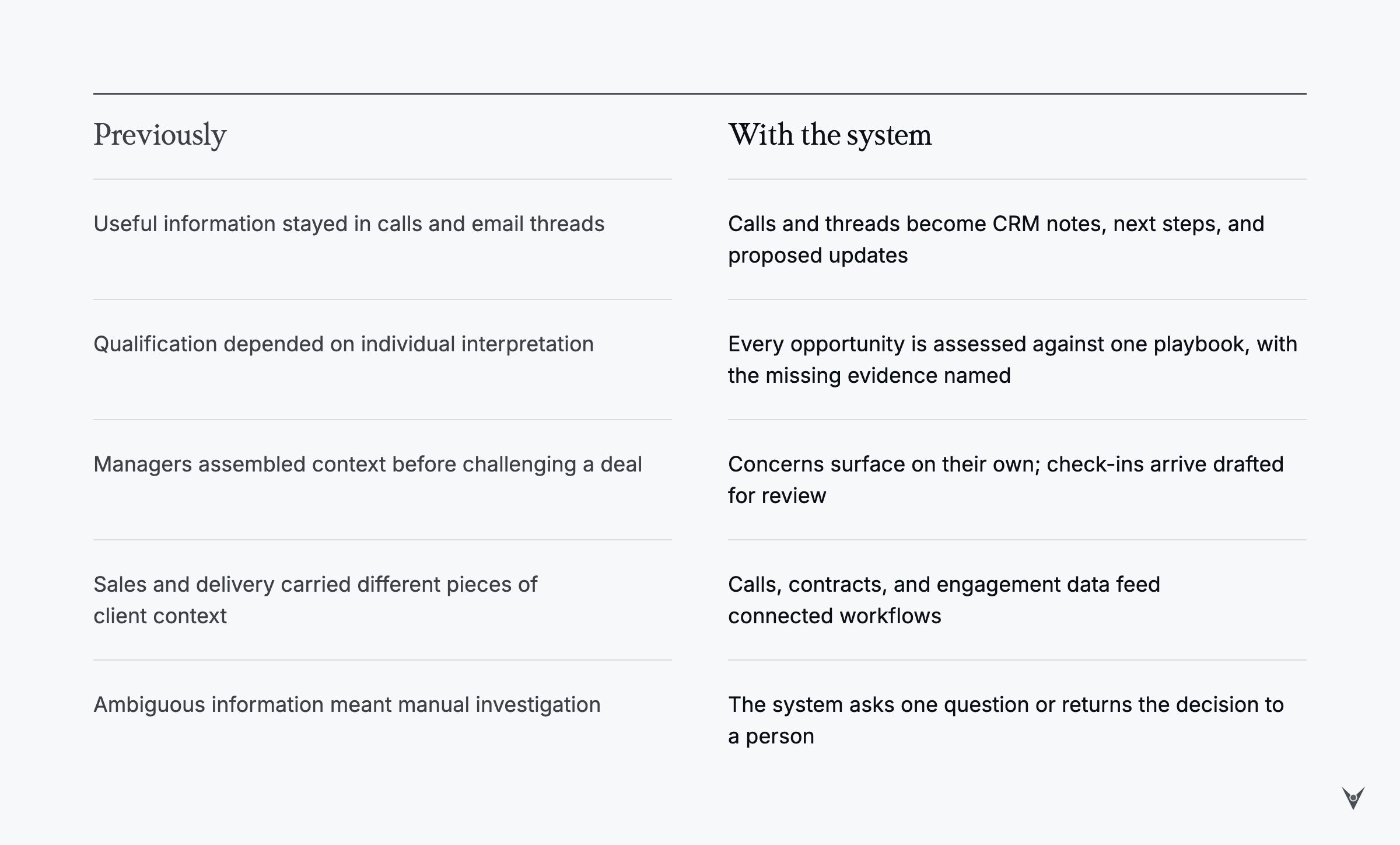
The nature of the work changed, not just the volume. Qualification used to depend on individual interpretation; now every opportunity is measured against one playbook with the missing evidence named explicitly. Managers used to assemble context before challenging a deal; now concerns surface on their own and check-ins arrive already drafted for review.
Sales and delivery stopped losing information at the handoff. A real example: during a call about an existing engagement, a client mentioned a separate need that could benefit from modernization — the kind of comment that normally evaporates when the call ends. The system flagged it, attached the client's own words as evidence, and emailed the rep with a proposed next step. A one-word reply created the opportunity in Dynamics that same afternoon, evidence attached, instead of the lead disappearing.
Operating cost stayed economically insignificant next to the labor leverage created. Because every model call is metered, the team can measure cost precisely by feature, user, and month — and it's small compared to the increase in activity and coverage.
The system's reach grew past "sales tool" without anyone planning it that way. Four months in, it also drives project manager coaching, contract obligation tracking, and an engagement portfolio view for leadership — because the same conversations that carry sales signal also carry delivery and legal signal, and once the infrastructure existed to capture one, capturing the others was a small step rather than a new project.
One important caveat the paper is upfront about: this is an observational before/after comparison, not a controlled test, and an April acquisition also changed headcount and pipeline during the measurement window — so the numbers show a real, large shift in captured activity, not a scientifically isolated causal effect.